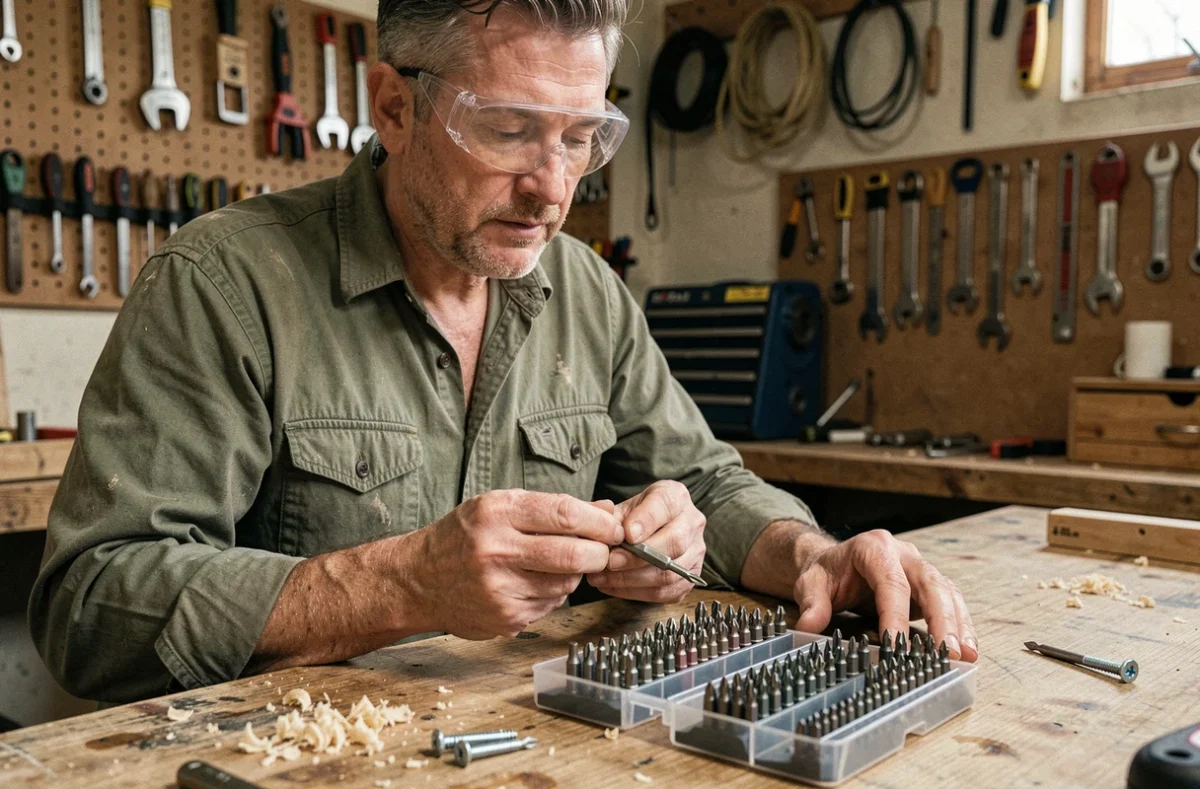
A screwdriver bit that costs just a few cents can end up costing far more than its price tag suggests. Rounded screw heads, a bit that snaps after a dozen screws, or being unable to reach a recessed screw: choosing the wrong bit can damage both the material and the tool. Comparing bit profiles, shank types and lengths for your project helps avoid these hidden costs.
The real cost of using the wrong bit for the material and screwdriver
Driving screws into softwood with a worn Phillips bit does not produce the same result as driving them into metal with a new Torx bit. The key factor is not the price of the bit, but whether its profile is compatible with the screw and the material’s resistance.
| Situation | Suitable bit | Unsuitable bit | Direct consequence |
|---|---|---|---|
| Frequent screwdriving in hardwood (oak, beech) | Pozidriv PZ2, S2 steel | Standard Phillips PH2 | Slipping, damaged screw head, manual rework |
| Building a deck (stainless steel screws) | Impact-rated Torx T25 | Standard Torx T25 on an impact driver | Bit breaks after a few dozen screws |
| Recessed fastening (furniture, formwork) | Long E 6.3 bit or a checked extension | Short C 6.3 bit without a suitable bit holder | Inaccessible screw, incomplete assembly |
| Occasional screwdriving into drywall | Basic Phillips PH2 | Oversized Torx bit | Unnecessary effort, poorly calibrated torque setting |
The table shows that the loss is not measured in the cost of the bit itself, but in wasted screws, rework time and, sometimes, materials that need replacing. On a deck project involving several hundred stainless steel screws, a non-impact-rated bit will break before you finish the first box of screws.
To explore the different types of screwdriver bits and their specific uses in detail, first understand what sets two seemingly similar profiles apart.
Phillips vs. Pozidriv: two cross-head profiles that are not interchangeable
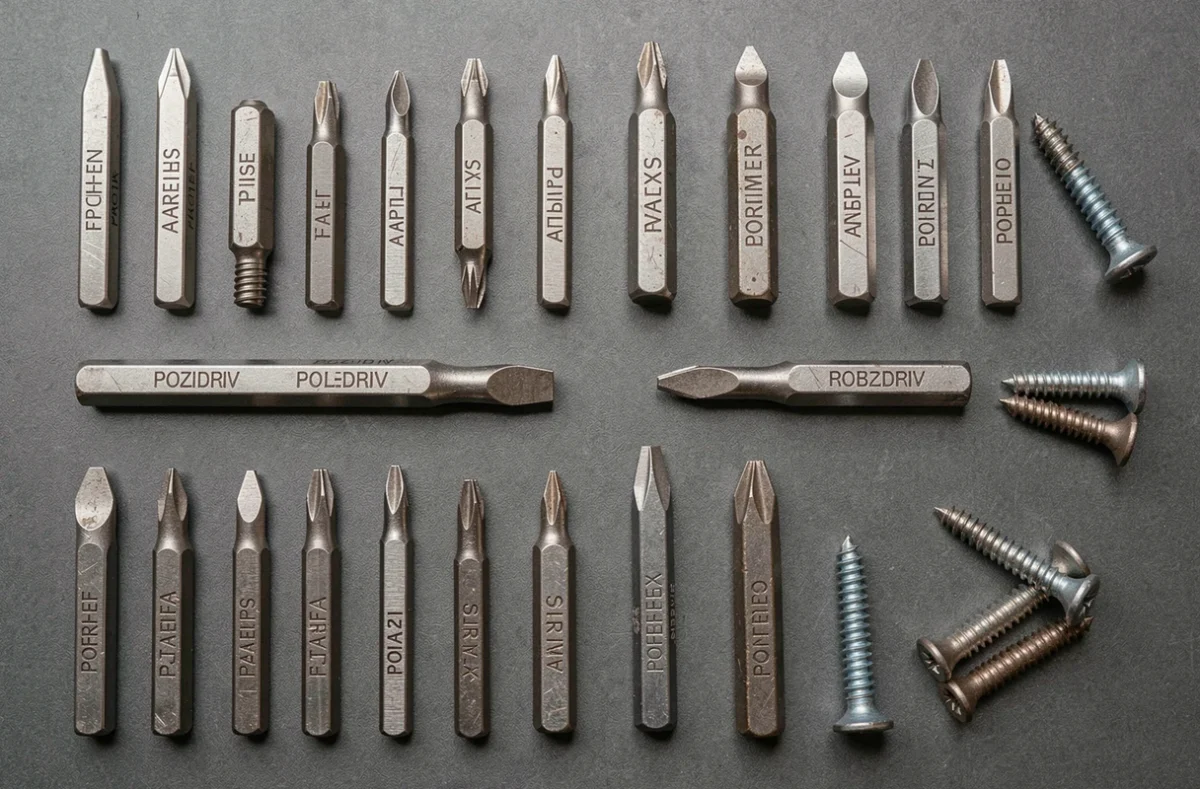
The most common DIY mix-up is between Phillips (PH) and Pozidriv (PZ) bits. From a distance, both have a cross-shaped tip. In practice, Pozidriv bits have additional ribs between the arms of the cross, improving grip and reducing cam-out (when the bit slips out of the screw head).
A PH bit inserted into a PZ screw may seem to fit. The screw starts driving normally. But as soon as the torque increases, the bit slips and rounds out the recess. In hardwood or metal, this mistake can damage the screw in seconds.
How to tell them apart at a glance
- A Phillips head has four simple slots forming a clean cross, with no markings between the arms
- A Pozidriv head has four small notches at 45° between the main arms, sometimes accompanied by a “PZ” marking on the screw packaging
- If in doubt, insert the bit without forcing it: a PZ bit in a PZ screw fits with a slight click and some resistance, while a PH bit in the same screw turns slightly without engaging
In France, most screws sold at DIY stores for wood and particleboard use the Pozidriv profile. Always using a Phillips bit out of habit means accepting a rate of damaged screws that could be zero.
Bit shank and tool holder: the overlooked mechanical compatibility
Choosing the right profile is not enough if the bit’s shank does not match the screwdriver’s chuck or bit holder. The ISO 1173 standard defines two common formats in particular.
C 6.3 shanks are used on short bits (about 25 mm). These bits need a magnetic or locking bit holder to be used in a standard chuck. The longer E 6.3 shank is designed to fit directly into certain quick-release tool holders.
A C 6.3 bit inserted into a clamping chuck without a bit holder can fall out or vibrate. This reduces screwdriving accuracy and causes uneven bit wear. Before buying a bit set, check which type of tool holder your screwdriver has: this information is in the manual, often under “quick-release system” or “hex chuck.”
Bits for impact drivers: a separate investment
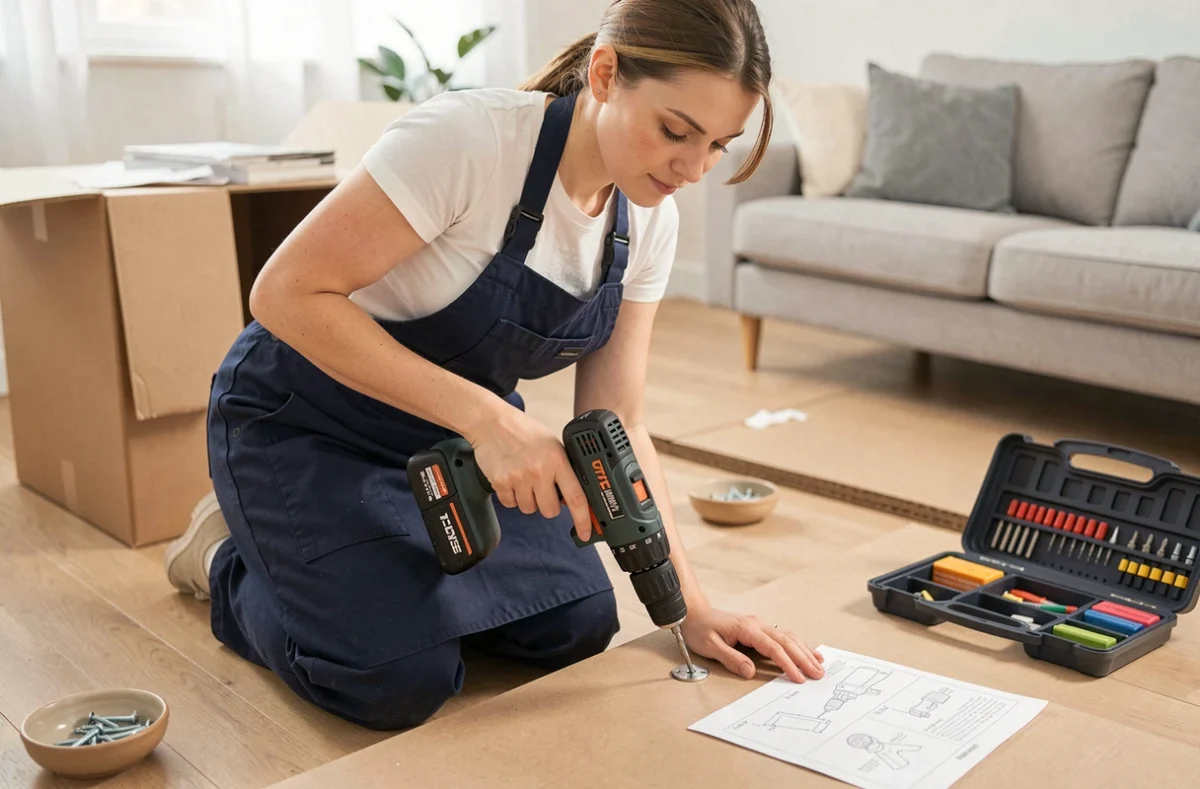
An impact driver delivers high-intensity rotational pulses. A standard bit made from ordinary steel may physically fit, but it is not designed to absorb repeated impacts. Metal fatigue can cause a crack, followed by a clean break, sometimes in the middle of driving a screw.
Bits labeled “impact” or “torsion” have a deliberately flexible zone, usually visible as a slightly narrower section behind the tip. This zone absorbs some of the energy instead of transmitting it all to the bit tip.
When an impact-rated bit is worth it
For occasional screwdriving into softwood (assembling flat-pack furniture, putting up shelves), a standard bit is sufficient if you are not using an impact driver. On a deck, cladding or framing project using an impact driver, however, every bit must be explicitly rated for this use.
Manufacturers do not all follow the same testing protocols when rating a bit as “impact.” The lack of a single standard makes it difficult to compare brands. One reliable indicator is the material: heat-treated S2 steel bits offer a good balance of hardness and flexibility for impact applications.
Bit length and screw access: choose the right size for your project
A 25 mm bit is suitable for most everyday jobs. But as soon as a screw is recessed (at the back of a cabinet, in a closet rail or in formwork), length becomes the main consideration.
Long bits (50 mm, 75 mm or more) let you reach these screws without an extension. Check that they are compatible with your tool holder: a long bit that is not held securely can wobble and damage the screw recess. Some long models use the E 6.3 format for a more secure lock.
When no standard long bit will do, a magnetic hex extension connects a short C 6.3 bit to the chuck. However, this setup adds another point of play, so it should be reserved for low-torque screwdriving.
Choosing a screwdriver bit comes down to three practical checks: the exact screw profile (not just the “cross” or “star” family), a shank format compatible with the tool holder, and impact resistance if your screwdriver requires it. Every mistake on one of these points costs you damaged screws and wasted time—far more than the bit itself.