A bag you no longer dare to carry because its strap is fraying, a belt whose buckle turns green after three months, earrings relegated to the bottom of a box because they go with nothing: these scenarios point to a problem with your approach, not your taste.
Choosing fashion accessories that bring out your everyday style means applying three filters before you buy: how well they work with your outfits, the quality of the materials, and how long the piece will actually last.
Materials and care: what to look for before buying an accessory
Have you ever turned a bag over in a store to look for its materials label? It’s a common habit with clothing, but much less so with accessories. It should become second nature.
The European Ecodesign for Sustainable Products Regulation (ESPR, Regulation (EU) 2024/1781) sets out phased requirements by product category. For textiles, the specific rules are still to be defined in a delegated act. In the meantime, checking the materials, care instructions, and whether an item can be repaired is already an effective way to narrow down your choices when buying a bag or piece of jewelry.
In practice, ask yourself these three questions when you find an accessory you like:
- Are the materials clearly identified (full-grain leather, brass, merino wool), or hidden behind a vague term like “synthetic material”?
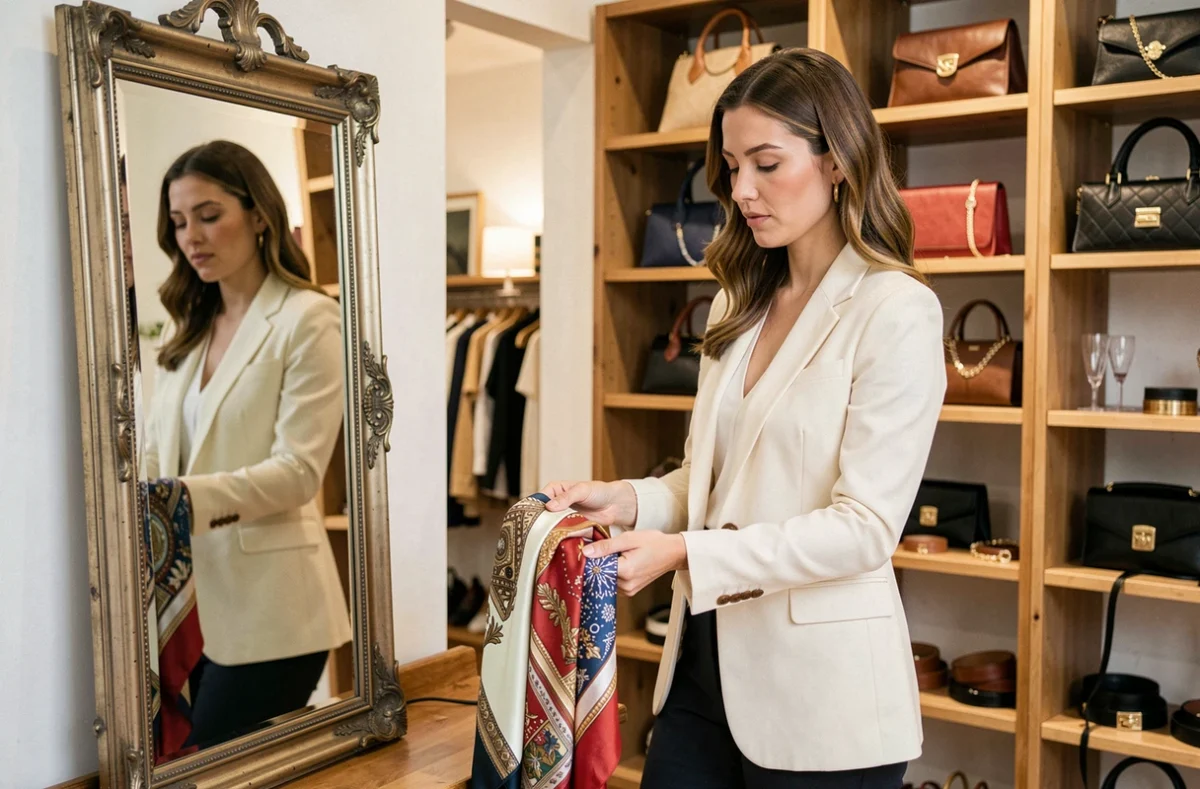
- Are the care instructions realistic for your everyday life? A silk scarf that needs to be dry-cleaned every time it’s washed probably won’t get much wear.
- Can the item be repaired? A riveted strap can be replaced by a leatherworker; a glued-on strap will end up in the trash.
These criteria don’t slow down your shopping. They help you avoid accumulating pieces you’ll stop using within a few weeks. To browse items with detailed information on materials and finishes, Blog 2 Mode’s accessories are a good place to start.
Secondhand accessories: an underrated way to express your style
Buying a pre-owned piece of jewelry or a secondhand bag is no longer unusual. It’s become a common choice, thanks to peer-to-peer platforms as well as less visible organizations.
According to Ademe, as cited by La Gazette des communes in July 2025, social and solidarity economy organizations accounted for more than 63% of the reuse and repurposing measured across six extended producer responsibility (EPR) sectors in 2023, including textiles. Reuse centers, nonprofit thrift stores, and charity consignment shops offer accessories at reduced prices, often sorted and inspected.
Why is this channel worth considering for your style? Because you can find pieces that are no longer being made: a 1990s leather belt, a gold-tone brooch you can’t find in stores, or a vintage scarf with distinctive patterns. Secondhand accessories make it easy to stand out, precisely because you won’t see the same piece ten times on the same street.
A useful habit: before buying a new accessory, check whether you can find something similar secondhand. If it’s in good condition and the material has aged well, it will do exactly the same job stylistically.
Build an accessory collection that fits your everyday style
Accumulating accessories doesn’t create a style. What makes the difference is how they work with the outfits you actually wear. Here’s how to think it through.
Identify the colors you really wear
Open your wardrobe and pick out the three colors you wear most often. Black, navy, and off-white? Khaki, camel, and burgundy? Your accessories should complement this existing palette, not clash with it.
A bright red bag only makes sense if you own at least four or five outfits it works with. Otherwise, it’ll stay in the closet. A camel bag, on the other hand, goes with raw denim, a black dress, and khaki trousers. Always choose an accessory’s color with the clothes you already wear in mind.
Adjust your accessories to the occasion
A simple outfit (jeans, a plain sweater, white sneakers) can handle a statement accessory: drop earrings, a patterned scarf, or a structured bag in a bold color. By contrast, a printed dress or an already detailed outfit is better paired with understated accessories—a delicate chain or a belt in a matching shade.
The rule is simple: choose just one focal point per outfit. If the dress makes a statement, keep your jewelry subtle. If the look is neutral, let your accessory do the talking.
Repairability and a second life: choose accessories that last
Transparency about a product’s environmental impact is becoming a regulatory compliance issue, not just a marketing claim. Vague labels like “eco-friendly” or “green,” without concrete information about materials or manufacturing, should be treated with caution.
In practical terms, a durable accessory can be identified by a few specific details:
- The stitching is even and the edges are finished (no loose threads, no visible glue on a bag).
- Metal parts (belt buckles, jewelry clasps, bag clips) are screwed or riveted in place, so they can be replaced.
- The manufacturer or retailer clearly lists the materials and, ideally, offers a repair service or can recommend a craftsperson.
A repairable accessory may cost more upfront, but over five years it can work out cheaper than repeatedly buying disposable pieces. You can also resell or give it away in good condition, extending its useful life.
Choosing fashion accessories that bring out your everyday style isn’t about accumulating more or chasing trends. It’s about knowing what you wear, reading labels carefully, and spotting pieces that will last through the seasons—whether they’re brand new or pre-loved.