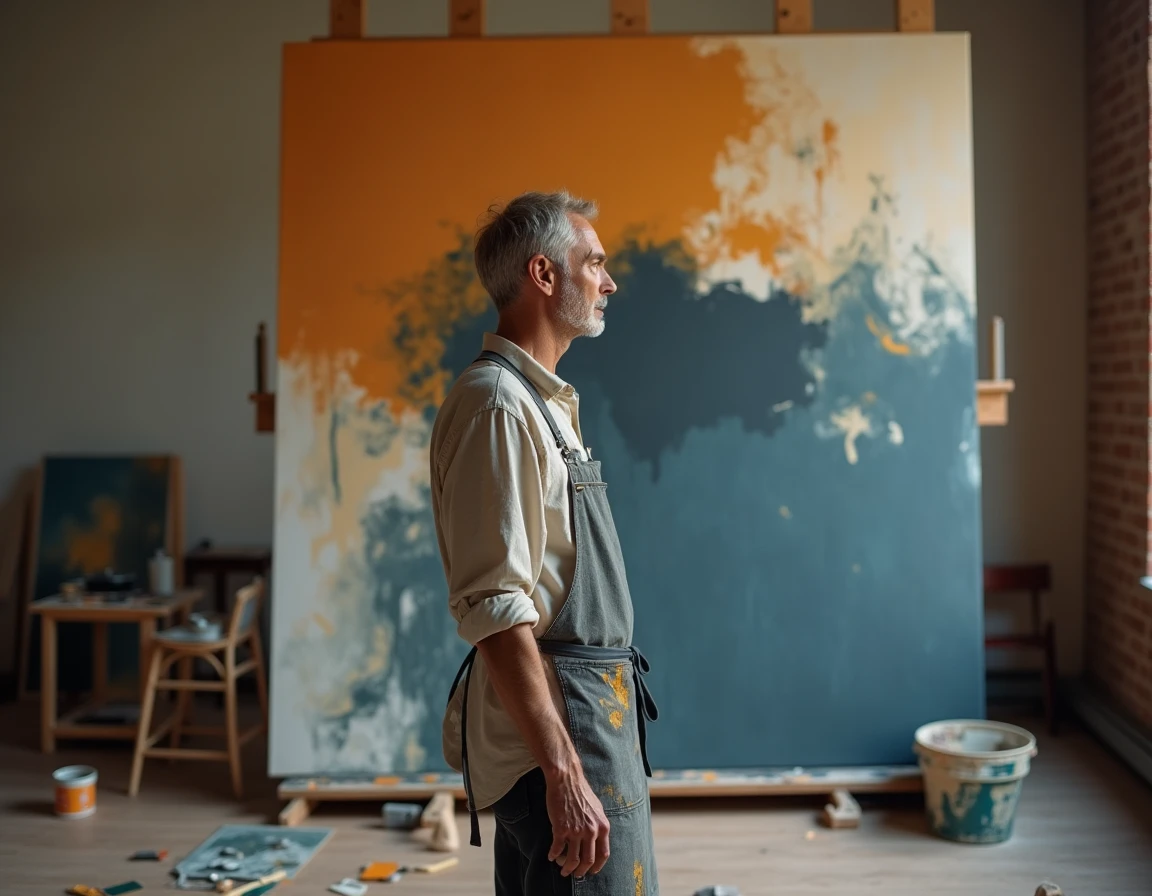
Look at an old canvas bought at a flea market. It might depict a pastoral landscape, a bouquet of wilted flowers, or a forgotten portrait. Now, imagine an artist taking it up, adding quirky characters, nods to pop culture, and a good dose of humor. The painting changes in meaning, tone, and life. This is precisely the work of Nik Lasson, a painter who transforms works destined for the trash into contemporary creations full of mischief.
Recycled art: when painting is born from a second chance
The approach of Nik Lasson is based on a gesture that is simple to describe but rare to see in the painting world. He buys old canvases destined to be thrown away, found in thrift stores or deposits, and then paints directly over them.
The original painting does not completely disappear. It remains visible in transparency, like a memory. The new addition disrupts the initial reading. A rural landscape is inhabited by a cartoon character. A classic portrait gains a pair of sunglasses or an incongruous accessory.
Each recycled canvas becomes a dialogue between two eras. The old paint layer retains its texture, cracks, and yellowed varnish. The new intervention brings bright color, contemporary strokes, and deliberate contrast. This process has a name in the field of visual arts: recycled art, or upcycling art.
What distinguishes this approach from simple détournement is the respect for the medium. The canvas is not scraped or covered with a flat white. It is integrated into the final project, with its flaws and material history.

Visual influences: pop art, surrealism, and retro culture
Have you ever noticed how some old images provoke a smile when taken out of their context? Nik Lasson exploits exactly this mechanism. His visual universe draws from three complementary directions.
- Pop art, with its saturated colors and borrowings from mass culture. An advertising motif, a repurposed logo, or a television icon can emerge amidst a 19th-century bucolic scene.
- Surrealism, in the logic of unexpected associations. The juxtaposition between the original subject of the canvas and the contemporary addition creates a surprise effect akin to surrealist collage, without adopting its gravity.
- The popular culture of the artist’s youth, which provides a repertoire of immediately recognizable visual references. Cartoons, toys, movie posters: these elements function as shared keys of interpretation for a broad audience.
The result does not seek provocation. It aims instead for accessible visual humor, rooted in nostalgia. The canvases speak to those who recognize the references as much as to those who simply appreciate the contrast between old and modern.
Institutional recognition in Sweden: Vårsalongen 2021
Working with scraps does not condemn an artist to remain on the fringes of official circuits. Nik Lasson was associated with Vårsalongen 2021, a collective exhibition organized by Liljevalchs, one of the oldest art venues in Stockholm.
Why does this selection matter? Vårsalongen (literally “the Spring Salon”) is an event open to all artists residing in Sweden. The selection is made by an independent jury, making it a recognized filter in the Swedish art scene. Being featured validates a practice in the eyes of both professionals and the public.
This participation shows that recycled art, often perceived as playful or anecdotal, can hold its place in a demanding museum context. The humorous dimension of Lasson’s work was not an obstacle; on the contrary, it likely contributed to distinguishing his pieces in a salon where diversity of proposals is the norm.
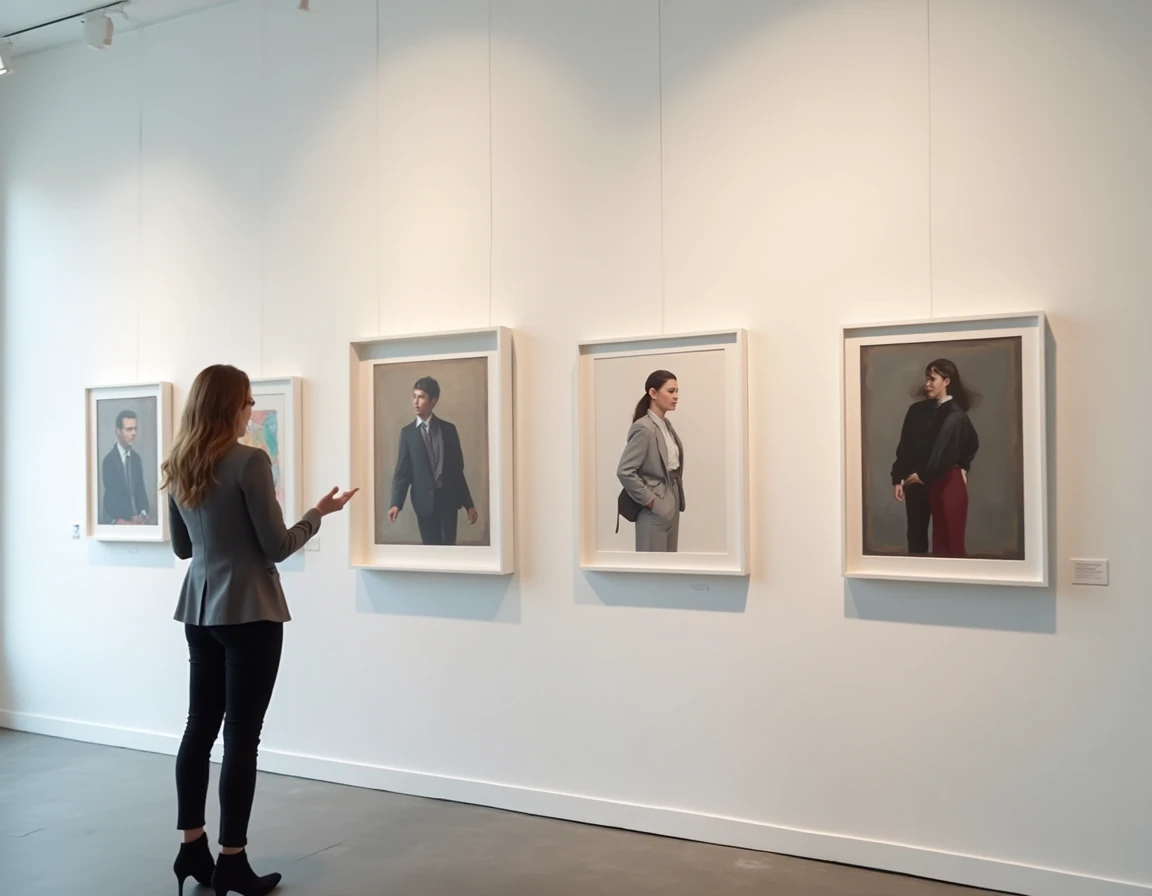
Upcycling art and children’s awareness: a natural bridge
For parents looking to awaken their children to art, Nik Lasson’s work offers a concrete entry point. Showing that an abandoned canvas can become a work full of humor conveys two ideas at once.
The first: creating does not necessarily require new materials. An old frame, a faded painting, a broken object can serve as the basis for an artistic project. This logic aligns with the creative DIY practices that many families already know.
The second: contemporary art does not require prior knowledge to be appreciated. When a child sees a dinosaur painted on a 19th-century mountain landscape, they laugh. They understand the contrast without needing an explanation of the historical context or the codes of the art market.
Reproducing the approach at home
Recovering an old framed reproduction from a garage sale costs almost nothing. With acrylic paint and a fine brush, a child can add their own characters to the existing scene. The gesture is accessible from the age of five or six.
The exercise develops both observation (what does the original canvas show?) and imagination (what do I want to add?). It also teaches, without stating it, that the value of an object can change depending on the perspective one takes.
Nik Lasson’s work reminds us that a painting does not need to be born on a blank canvas to have meaning. His pieces, at the crossroads of recycling and painting, show that humor and nostalgia can sometimes be enough to transform a scrap into a work of art. For families, it is also an invitation to look at everyday objects differently, including those thought to be destined for the dump.