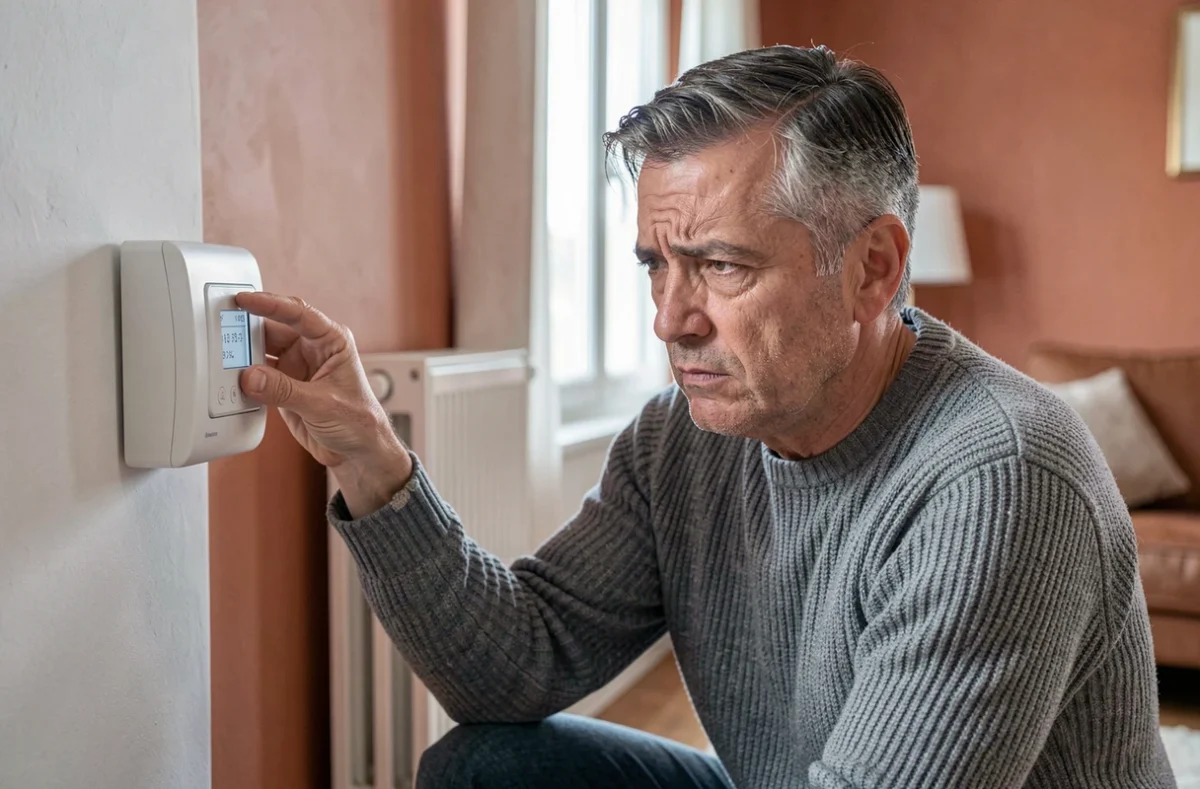
A heating thermostat that drifts by a few degrees or no longer switches the boiler on at the right time has two measurable effects: higher energy bills and reduced thermal comfort.
Identifying the problem means distinguishing between the thermostat itself, the thermostatic radiator valve and the boiler. The difference between the displayed and actual temperatures, how often the system starts up, the condition of the screen and how quickly it responds to commands are the four things to check before taking action.
Temperature differences and heating cycles: a comparison of symptoms
| Observed symptom | Likely cause related to the thermostat | Likely cause related to another component |
|---|---|---|
| Difference of more than 2–3 °C between an external thermometer and the thermostat display | Faulty internal sensor or poorly positioned thermostat (near a heat source or in a draught) | Undersized radiator, poor insulation in the load-bearing wall |
| Short cycles: the boiler starts and stops every 2 to 5 minutes | Incorrectly set hysteresis or an oxidised internal contact cutting off the signal too soon | Water pressure too low in the circuit, boiler safety lockout activated |
| Heating runs continuously despite the set temperature being reached | Thermostat relay stuck in the closed position | Three-way valve stuck open, circulation pump running continuously |
| Screen off or missing segments | Worn-out batteries or interrupted power supply | Unrelated to the boiler itself |
| Intermittent loss of radio connection (wireless thermostat) | Low batteries, excessive distance or electromagnetic interference | Faulty boiler receiver module |
This table highlights a point that is often overlooked: the same symptom can be caused by the thermostat or another part of the system. Comparing the displayed temperature with a reliable thermometer placed at the same height (about 1.50 m) is the quickest way to isolate the problem. A difference of more than 2–3 °C points to the thermostat. A small difference combined with persistent discomfort is more likely to indicate an issue with the hydronic system or heat emitter.
For more information about the signs of a faulty heating thermostat, a structured diagnosis can help you avoid replacing a unit that is still working.
Central thermostat, thermostatic radiator valve and valve: three components not to confuse
A common source of confusion makes diagnosis more difficult: blaming the room thermostat for a problem that actually comes from a thermostatic radiator valve or radiator valve. The central thermostat controls the boiler or heat pump. The thermostatic radiator valve, on the other hand, only controls the valve on the radiator it is attached to.
A cold radiator does not prove that the central thermostat is faulty. If the boiler is running normally and other radiators are heating up, the problem lies with the thermostatic head or valve on the affected radiator. Conversely, if no radiators are heating despite a high set temperature, the central thermostat or boiler relay may be at fault.
Simple test to locate the fault
- Raise the central thermostat setting several degrees above the room temperature. If the boiler does not start within the next few minutes, the thermostat or its connection to the boiler is likely at fault.
- For a wired thermostat, check circuit continuity at the terminal block: an oxidised contact or loose wire is enough to interrupt the control signal.
- For a wireless model, replace the batteries and temporarily move the thermostat closer to the boiler receiver to rule out a range issue.
- If the boiler starts but only one radiator stays cold, operate that radiator’s thermostatic head (turn it fully several times, then close it) to free the valve.
This four-step test takes less than ten minutes and can save you from calling a heating engineer over a flat battery.
Room-by-room temperature control: what Article R. 241-31-1 of the Energy Code means for diagnosis
The regulatory deadline for automatic temperature control in existing buildings has been postponed to 2030. Article R. 241-31-1 of the Energy Code requires automatic control by room (or by zone where justified), with at least hourly programming and four modes: comfort, reduced, frost protection and off.
This requirement applies to control functions, not a specific appliance model. A mechanical thermostat capable of programming all four modes may be sufficient. However, a faulty thermostat that can no longer maintain the set temperature or has lost its hourly programming function may eventually make the installation non-compliant.
Should you replace or repair it?
Before ordering a smart thermostat, check which functions the current unit still performs. If only the screen is fading but the relay still works, the thermostat may be recalibrated or simply powered again. Replacement is warranted when the internal contact is so oxidised that it causes repeated short cycles, when the temperature sensor is consistently inaccurate, or when the unit does not offer the modes required by regulations.
Financial assistance for temperature control has changed in recent years. Checking whether your home qualifies under current schemes before making a purchase can sometimes cover a significant portion of the cost.
Thermostat failure and excess energy consumption: measuring the real impact
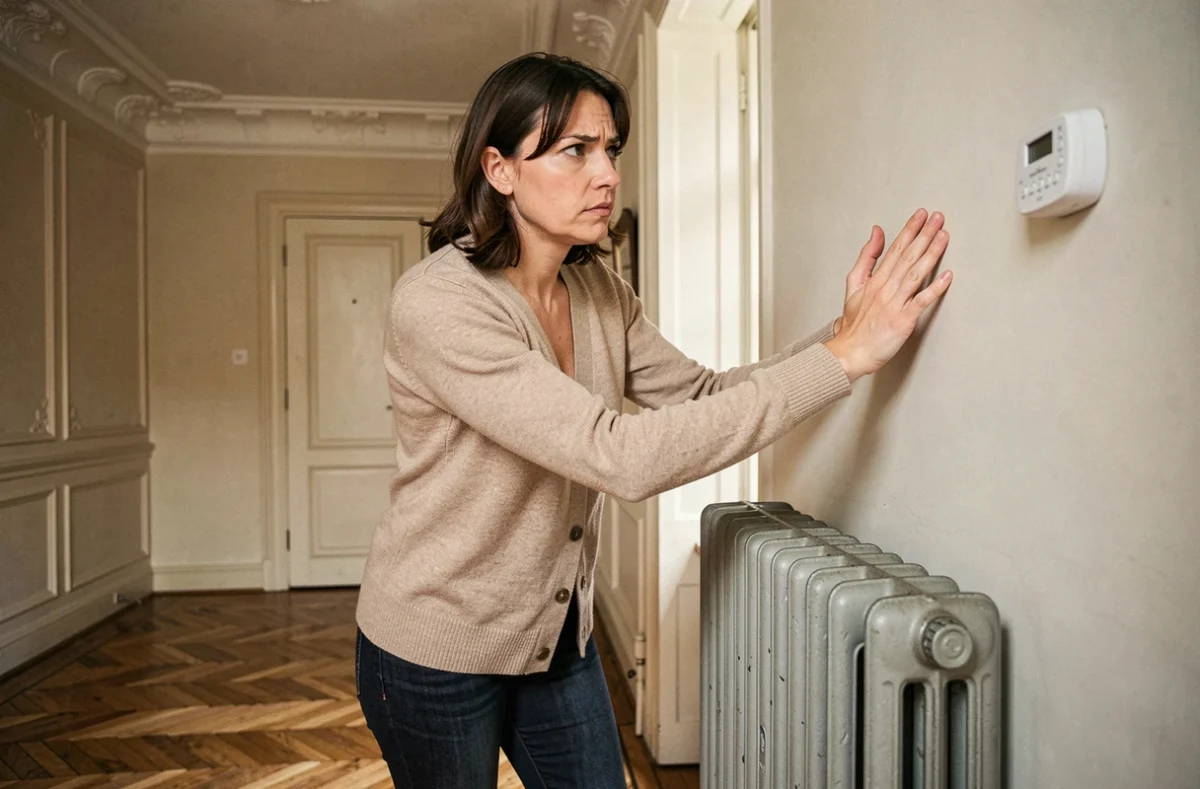
A thermostat stuck in the open position keeps the boiler running continuously, even after the set temperature has been exceeded. The resulting excess consumption depends on the type of heating and the home’s insulation, but it can be spotted on your bill by comparing monthly consumption over the same heating period.
A sudden increase in consumption without any change in habits often points to a control fault. The thermostat is not always the only cause (a circulation pump stuck in continuous operation has the same effect), but it is the easiest component to check first.
On smart models, a loss of Wi-Fi or cloud connection can cause the unit to switch to a fallback mode, applying a default setting that is often higher than the usual schedule. Checking the thermostat app’s history can help identify these dropouts.
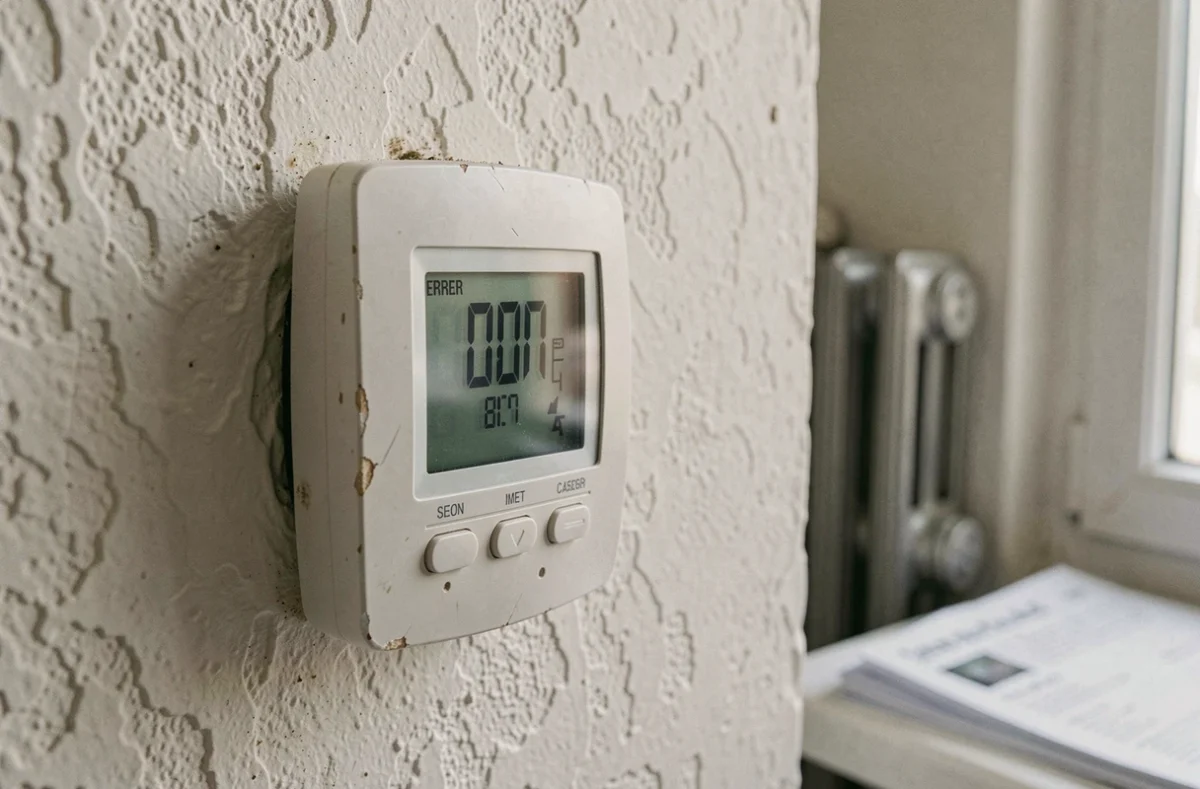
A thermostat displaying error codes immediately after a heating request indicates a conflict between the command sent and the boiler’s response. This symptom warrants professional attention, as it may also point to a fault in the heat generator.
One final check to keep in mind: the thermostat’s location. A unit exposed to direct afternoon sunlight, placed above an electrical appliance or positioned in a draught will give consistently inaccurate readings. Moving the sensor by a few dozen centimetres may be enough to restore reliable temperature control without replacing anything.