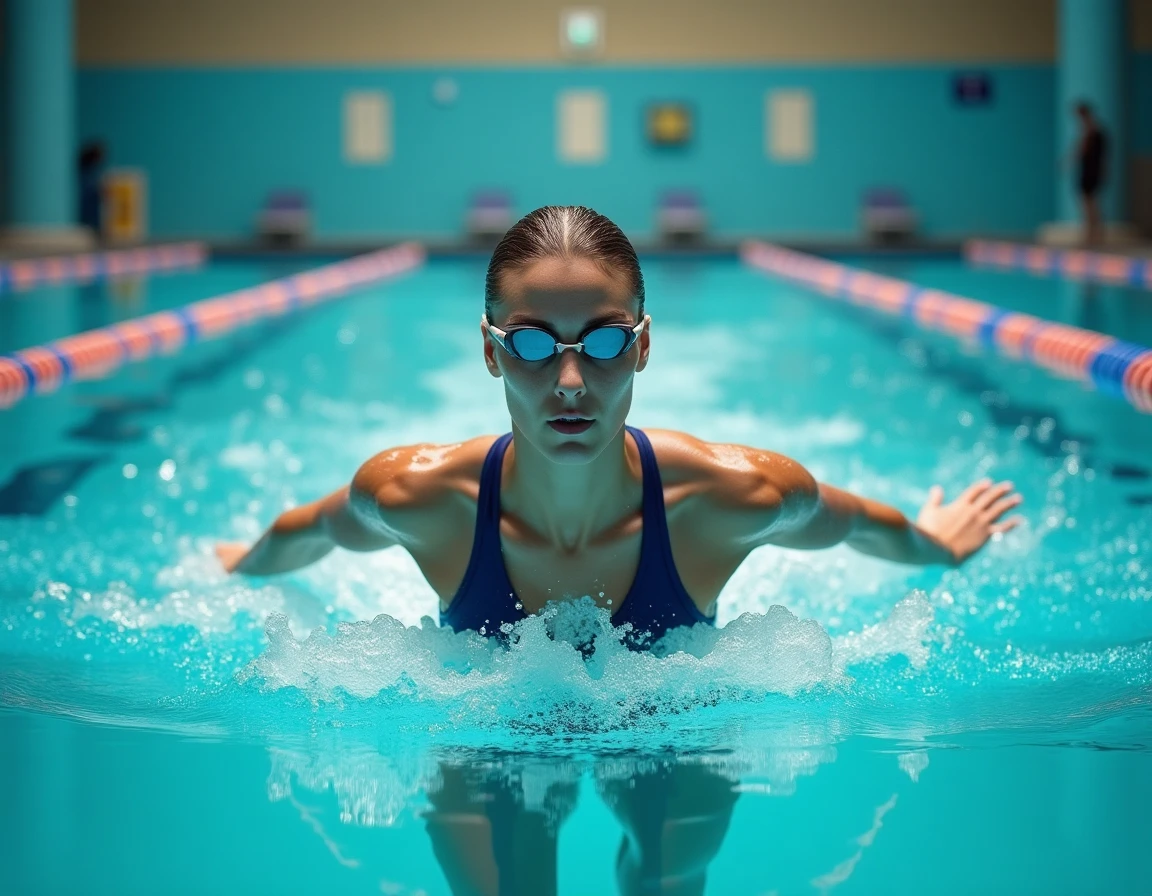
Breaststroke, freestyle, backstroke, butterfly: each stroke engages the legs differently. To refine and tone the lower limbs, the choice of stroke matters less than how the legs work in the water. Swimming remains a sport predominantly focused on the upper body, which necessitates targeting the lower body with precise strategies if the goal is to gain tone without adding bulk.
Muscle Engagement of the Legs by Stroke: Comparison
Not all strokes engage the same muscle groups in the thighs and glutes. The table below summarizes the main differences in terms of targeted muscles and type of effort.
| Stroke | Mainly Engaged Leg Muscles | Type of Movement | Intensity on Lower Limbs |
|---|---|---|---|
| Breaststroke | Adductors, hamstrings, quadriceps | Lateral flexion-extension (scissor) | High |
| Freestyle | Quadriceps, glutes | Quick vertical kicks | Moderate |
| Backstroke | Glutes, hamstrings | Inverted vertical kicks | Moderate |
| Butterfly | Quadriceps, glutes, abdominals | Full body undulation | Very high |
Breaststroke is characterized by a scissor movement of the legs that recruits adductors and hamstrings simultaneously. Freestyle and backstroke produce a more continuous but less targeted effort on the inner thighs. The technically demanding butterfly heavily engages the thighs but is difficult to maintain over long sets.
Find more weight loss tips on Sportlinea to refine your pool program.
Breaststroke and Freestyle Kicks: Two Different Approaches for the Thighs
Breaststroke requires the legs to work through a full range of motion. Each scissor kick stretches and then contracts the muscles on the inner thighs. This movement promotes muscle work in length rather than volume, aligning with the goal of toning without thickening.
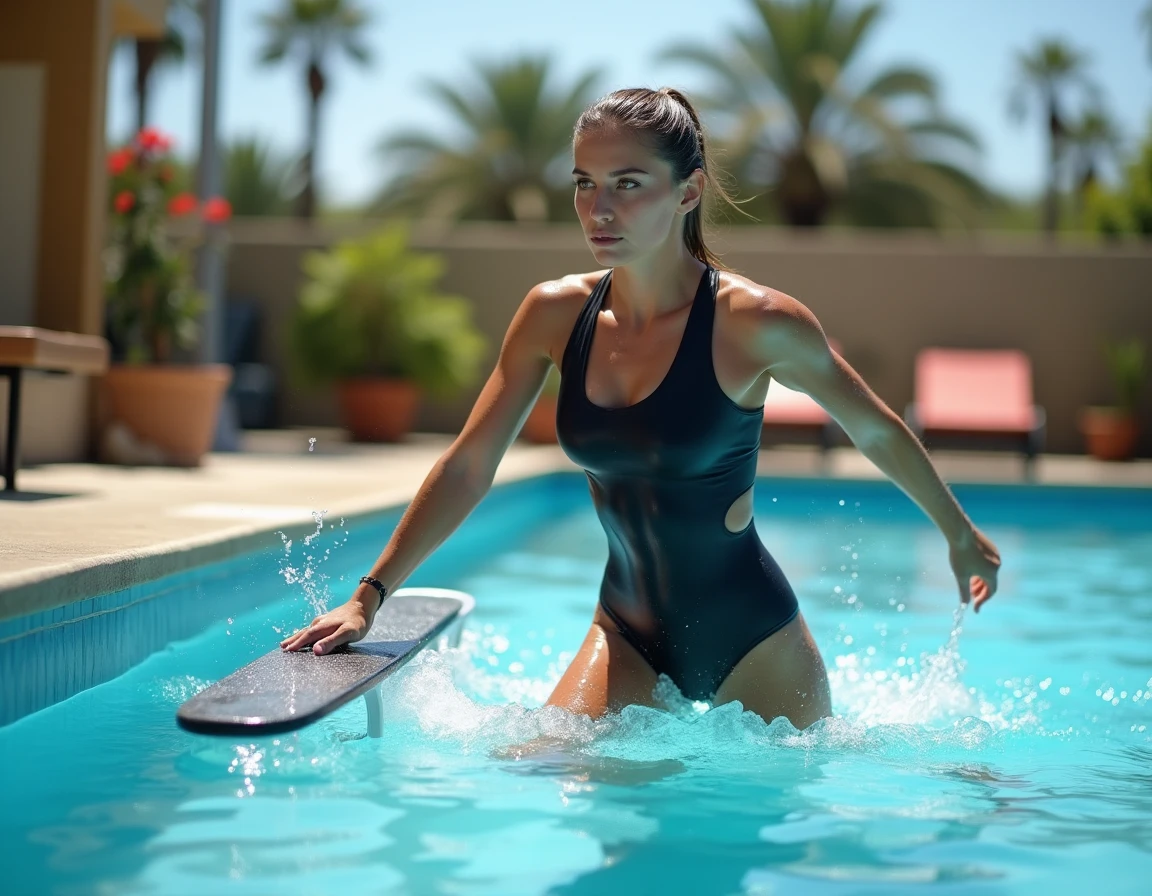
In contrast, freestyle and backstroke kicks primarily engage the quadriceps and glutes through short, rapid movements. The effort is less localized on the inner thighs, but the high frequency of kicks generates significant energy expenditure. During a long session, this type of work contributes more to cardio than to targeted strengthening.
The difference can be summarized as follows: breaststroke visibly sculpts the thigh muscles, while freestyle and backstroke refine them through overall calorie expenditure. Combining both in a single session remains the most coherent strategy for achieving both slim and toned legs.
Localized Fat Loss in Swimming: What Research Shows
A common belief is that swimming breaststroke “melts” the inner thighs. Scientific research debunks this idea. A review published in Sports Medicine reminds us that localized fat reduction is not scientifically proven, including through swimming. Swimming breaststroke strengthens the thigh muscles, but fat loss is distributed across the entire body.
This finding does not render swimming ineffective for refining the legs. The mechanism is indirect: by increasing the muscle mass of the lower limbs, resting energy expenditure rises. And the resistance of water, much greater than that of air, turns each movement into an effort against moderate resistance over time, a format favorable to caloric expenditure without hypertrophy.
To maximize this effect, sessions should prioritize duration and consistency. Extended kick sets with a board or light short fins are more aligned with this goal than short sprints in butterfly.
Aquatic Intervals and Short Fins: Variables That Change Results
Training formats in the pool are evolving. Aqua HIIT (high-intensity intervals in shallow water) is gaining traction, and available data shows that this type of session improves leg strength and power more quickly than continuous swimming at a moderate pace. A study published in Frontiers in Physiology confirms the advantage of aquatic intervals (jumps, runs, explosive kicks) over simple swimming volume for lower limb tonicity.
The choice of equipment also plays a role. Recent recommendations from the French Society of Physiotherapy emphasize the use of low to moderate resistance and extended sets to promote muscular endurance rather than hypertrophy. Practically, this points towards flexible short fins rather than rigid fins or a monofin.
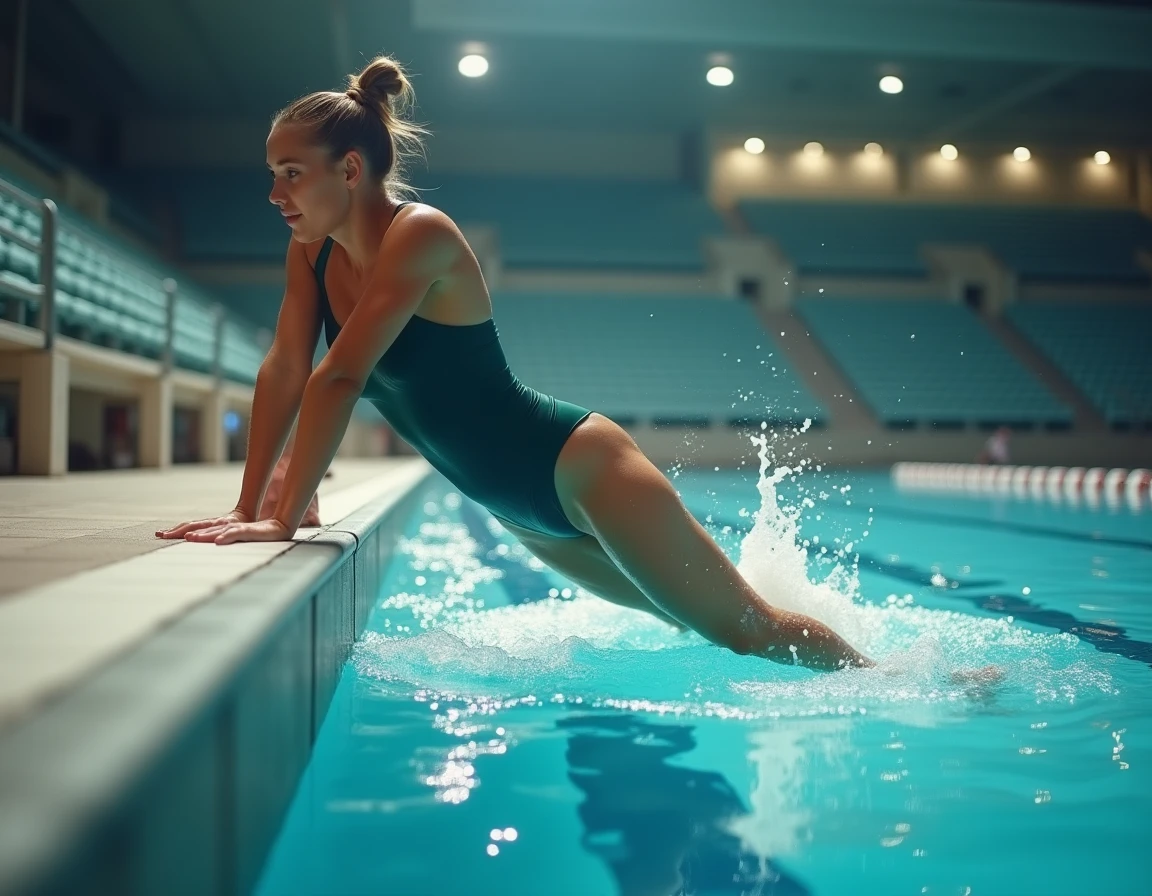
Here are the most effective variables for targeting leg tonicity in the pool:
- Alternate breaststroke lengths (full scissor movement) and sets of freestyle kicks with a board, maintaining a steady but sustainable pace over several minutes
- Incorporate intervals of explosive kicks (sprint kicks over one length, active recovery on the next) to stimulate power without generating excessive muscle volume
- Use light short fins on kick sets to increase resistance without stiffening the movement, which promotes prolonged muscular endurance work
- Vary positions (kicks on the stomach, back, side) to engage the glutes and hamstrings from different angles in each set
Frequency and Patience: The Often Underestimated Factor
Swimming refines the legs provided it is practiced regularly. Visible results on thigh tonicity require several weeks of consistent practice. Sporadic training, even intense, does not produce the same muscular adaptations as regular moderate effort.
The resistance of water also presents an advantage for individuals with excess weight or suffering from heavy legs: buoyancy reduces joint impact while maintaining real muscular effort. This point, often noted in rehabilitation, makes swimming accessible where running or gym workouts may pose constraints.
The determining factor for slimmer and toned legs is not so much the choice of a single stroke but the combination of breaststroke for muscle targeting, freestyle kicks for cardio, and aquatic intervals for power. Consistency does the rest.