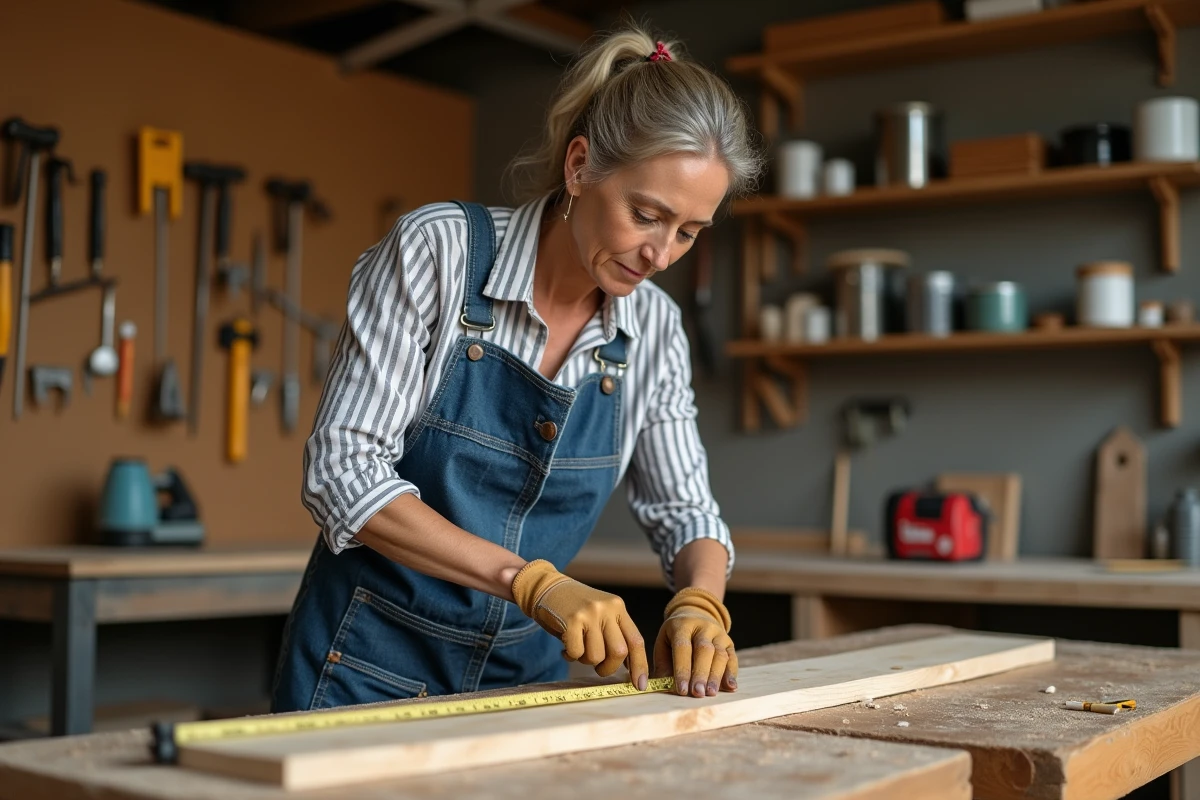
DIY, decorating, or gardening relies on a common foundation: the technical preparation of the project before the first brushstroke or spade dig. Choosing the right material, anticipating waste, adjusting your budget to the actual market prices—these are what separate a well-managed project from one that is abandoned along the way. This article details three concrete axes to structure your DIY, decor, and gardening projects.
Biosourced materials in DIY and interior decor
Renovation and interior decoration projects still largely rely on conventional materials: MDF panels, acrylic paints, synthetic coatings. An alternative has been gaining ground in individual residential settings over the past few years: biosourced materials.
The term refers to any construction or finishing product made from plant or animal materials. In common DIY, this includes pollutant-absorbing paints, plant fiber panels, hemp or wood-based insulators, and clay coatings. According to Ademe and CSTB, their use in residential renovation has been steadily increasing since 2022, driven by concerns about indoor air quality and rising energy costs.
Specifically, find all the info from Brico Déco Jardin to guide your material choices and keep up with industry trends.
Before you start, identify the type of surface to be treated. A clay coating, for example, adheres well to plaster or brick walls but requires a bonding primer on smooth concrete. For a plant fiber panel used as wall cladding, check compatibility with the room’s humidity: bathrooms and kitchens require a waterproof treatment, even on a so-called “natural” material.
The health argument deserves attention. A “pollutant-absorbing” labeled paint captures certain pollutants (notably formaldehyde), but its effectiveness decreases over time. It does not replace proper ventilation. Combining a biosourced coating with a functional mechanical ventilation system remains the most reliable configuration for healthy indoor air.
DIY and gardening budget: making choices in the face of rising prices
Online content often touts DIY as an economical solution. The current context nuances this discourse. Insee and UFC-Que Choisir document a marked increase in the cost of construction materials (wood, metals, insulators) and tools between 2021 and 2024.
This increase alters DIYers’ choices in three ways:
- Redecorating (painting, replacing handles, adding decorative battens) takes precedence over heavy renovation, as it requires less raw material for a strong visual result
- Large-scale projects (wooden decks, complete garden landscaping) are increasingly spread out over successive phases, each step corresponding to a controlled budget
- The second-hand market for tools and materials (wood scraps, tile lots, used power tools) is developing on resale platforms and in local recycling centers
Buying a well-inspected second-hand tool protects the budget just as much as a new purchase, provided you check the condition of the motor brushes on a drill or jigsaw, and test the battery under load on any cordless device. A set of new blades or bits can be a useful addition to a second-hand tool.
Prioritize high visual impact areas
In a decoration or garden landscaping project, focus the budget on the most visible elements. Indoors, wall paint and lighting transform a room more than changing baseboards. Outdoors, a well-placed perennial bed restructures the perception of a space better than an expensive concrete border.
Managing construction waste in DIY and gardening
Sorting and disposing of waste is the blind spot of most domestic projects. Since 2023, construction material distributors are required to take back sorted waste from the same categories of products they sell, free of charge. This obligation arises from the AGEC law (anti-waste for a circular economy) and its implementing decrees.
For individuals, this means that your wood scraps, leftover plaster, material packaging, or old joinery can be dropped off at a collection point with the distributor, at no cost. The Éco-maison collection network (formerly Éco-mobilier for furniture) also covers certain furniture waste from DIY decor projects.
Anticipate volumes before starting
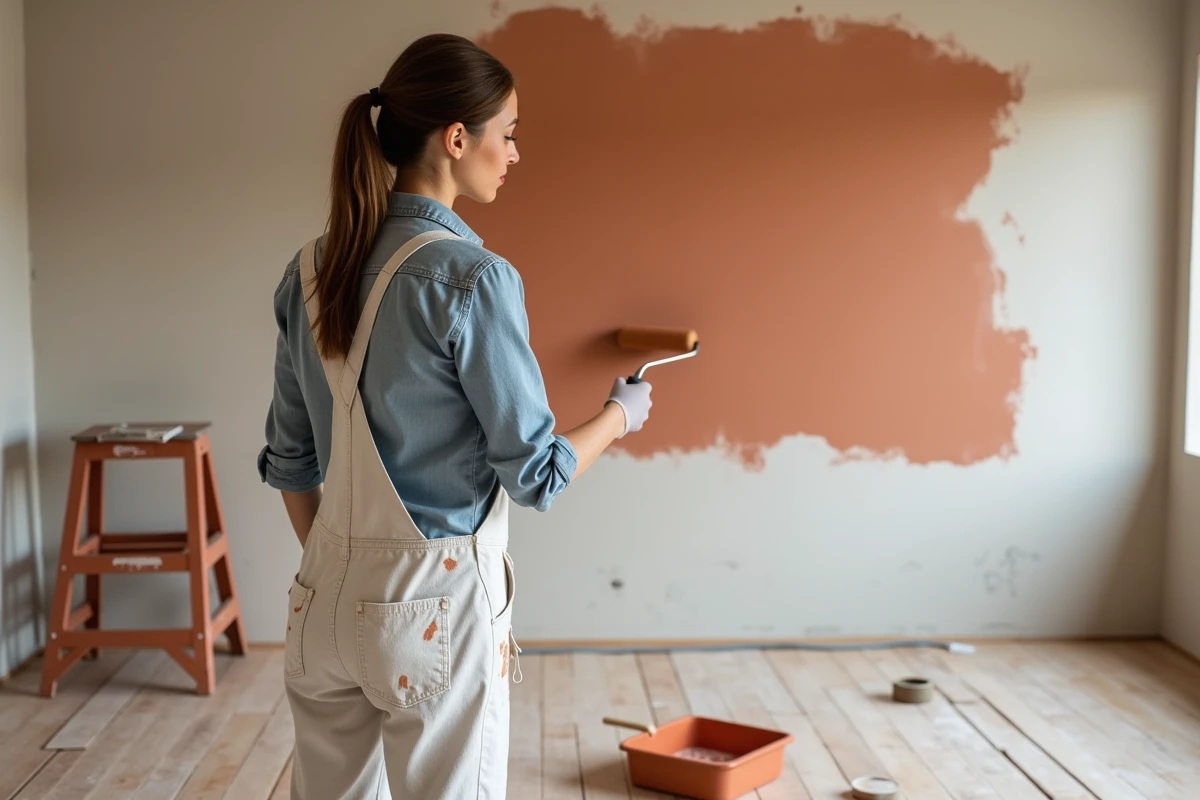
Before any project, estimate the volume of waste produced. A simple rule: for a painting job in an average room, plan for a rubble bag for residues (tarps, rollers, masking tape). For laying a floor or wall covering, scraps generally represent a significant portion of the purchased material.
- Separate inert waste (rubble, broken tiles) from non-hazardous waste (untreated wood, plaster) and hazardous waste (solvent-based paints, garden pesticides)
- Identify your drop-off point before starting: municipal waste disposal site, distributor take-back point, or specific collection for furniture
- Used pesticides should never go in household waste: they fall under a dedicated system, often accessible via municipal waste disposal sites
Integrating waste management from the planning stage of the project avoids unpleasant surprises on the day the project finishes. A garage cluttered with rubble for weeks is a sign of a project that hasn’t been thought through to the end.
DIY, decor, and gardening share this requirement for method. Materials suited to the surface and actual budget, prioritized spending areas, anticipated waste: these three axes structure a project that reaches completion without slipping off track.